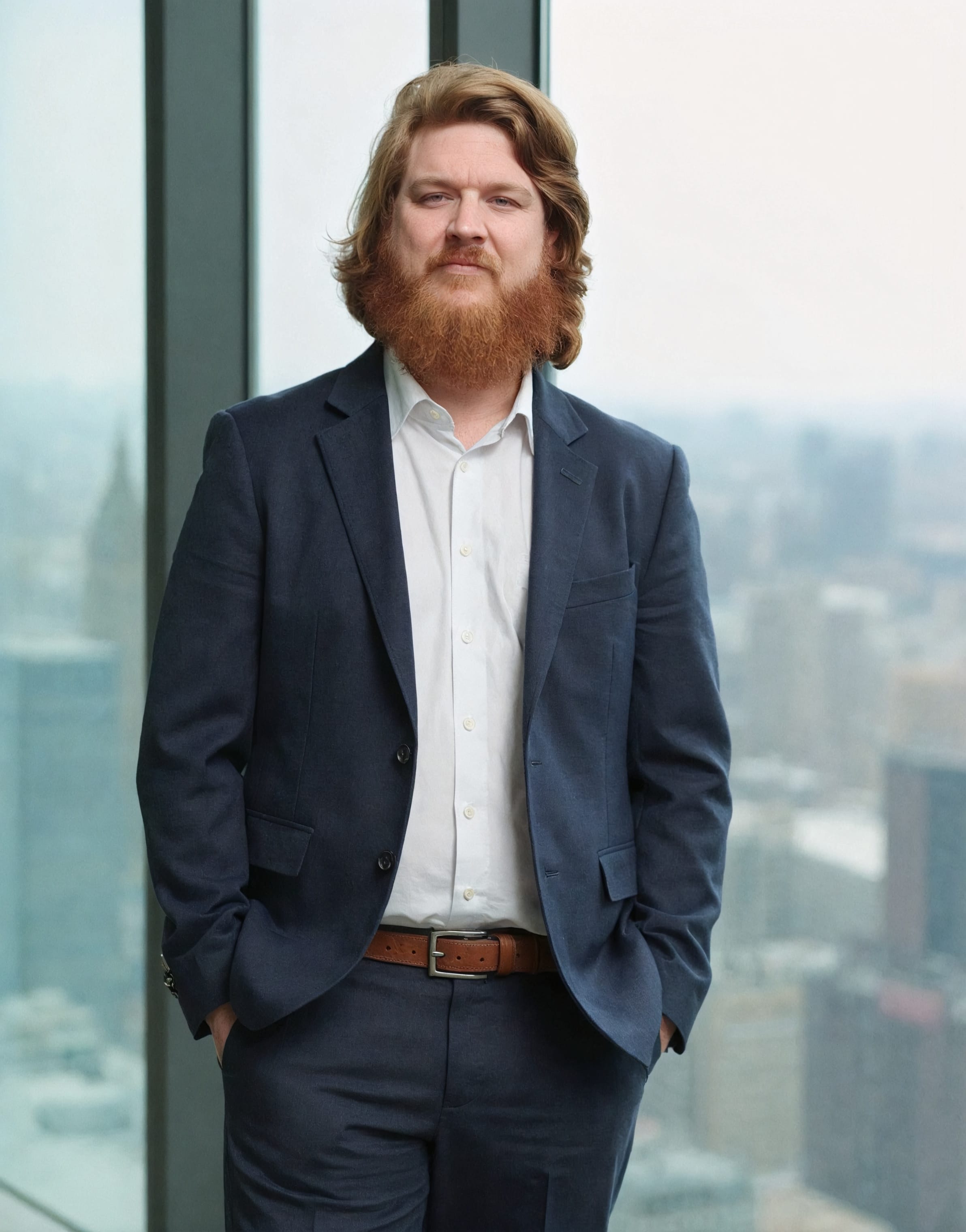
I am Tyler J. Grear, a computational biologist and biophysicist working where molecular simulation, machine learning, and automated reasoning intersect. My work over the years has carried a common thread of high-dimensional analysis and spatio-temporal pattern recognition, where the solutions I develop span statistical/machine learning, feature engineering, and first principles of biophysics. I earned my Ph.D. in Bioinformatics and Computational Biology with a concentration in Molecular Biophysics from The University of North Carolina at Charlotte where I worked in the Biomolecular Physics Group under Professor Donald J. Jacobs.
Prior to academia, I served in the United States Army as a combat engineer with the 572nd Mobility Augmentation Company where I performed route clearance and reconnaissance across multiple Afghan provinces such as Kandahar, Paktika, Logar, and Ghazni while attached to the 10th Mountain Division in support of Operation Enduring Freedom (OEF). Clearing routes demanded constant vigilance and the ability to read indicators out in the field, where a missed sign carried immediate consequences. This level of attention to detail has translated well into my research habits. My GI Bill benefits covered a B.S. in Physics with Honors and part of an M.S. in Applied Physics.
I have carried my work into national laboratory and agency settings. At Lawrence Livermore National Laboratory I performed research tasks in accordance with the Generative Unconstrained Intelligent Drug Engineering (GUIDE) mission directives such as molecular docking, free-energy calculations, and molecular dynamics simulations for medical countermeasure design. At the NASA Goddard Space Flight Center I developed algorithms to reduce the computational cost of radiative transfer calculations used in atmospheric modeling. I present regularly at the annual conferences and am a member of the Biophysical Society. Additionally, I review for journals including Computational Materials, Discover Nano, and Scientific Reports.
Alongside computational biology and biophysics I pursue automated reasoning, including Boolean and quantum logical frameworks established by Birkhoff and von Neumann. My first lead author publication was on a variant of quantum logic for commuting lattices called Supervised Projective Learning with Orthogonal Completeness (SPLOC). I am especially interested in how first-order predicates can be recovered from learned representations rather than prescribed in advance. This reimagining of SPLOC is called Automated Learning, Discovery, and Epistemic Navigation (ALDEN) where the 3 laws of thought, conceptualized by Aristotle and formalized as an algebra by Boole, are integrated as constraints of an eigenproblem.
I am a proud supporter of Stand Up for Science and a signatory of the Bethesda Declaration, the June 2025 open letter defending academic freedom, peer review, and integrity of the biomedical research community. I also submitted a public comment on the Office of Management and Budget’s 2026 proposed rule on federal financial assistance, opposing provisions that would place political override over peer review and destabilize the grant system scientific work depends on. My public comment can be found in the Briefs section here. That being said, American science still owes the taxpayer a clear account of what their investment buys. Until researchers lead that conversation with numbers, not slogans, both sides will continue arguing in the dark.
Within the next three to seven years I intend to stand up a group in a federal laboratory developing free-energy methods for medical countermeasures. The same calculation that bounds what an adversary can design also bounds how quickly we can answer it, and a nation that masters the free energy of molecular association can meet a novel agent in weeks rather than years. My focus is national security and preparedness of the American warfighter, and I write publicly about gaps in U.S. biosecurity because adversaries study them without regard for how they arose. That commitment to the American people is also why I intend to establish the Sergeant John Alden Lyons Foundation to support veterans pursuing STEM fields through scholarships.